 on Google


Lake Nakuru National Park
Size
188 km² (73mi²)
Founded
1961
Best time to visit
June to October, January and February
A beautiful lake in the heart of the Rift Valley
Lake Nakuru National Park is a magical ecosystem that protects endangered species, such as the Rothschild's giraffe and black and white rhinos. It also has a stunning waterfall, acacia forests, and diverse wildlife, including tree-climbing lions, leopards, buffalos, zebras and large bird populations like Lesser Flamingos and Great White Pelicans.

Lake Nakuru National Park: A spectacular park with a rich diversity of wildlife
Lake Nakuru National Park is a true guardian of African wildlife. Despite its small size, the park is home to an array of fauna and flora.
It is a paradise for bird lovers, home to many endangered species and one of the best places in Kenya to see rhinos.
The park is stunning. It’s as if all of the colours of Africa converge here to form a magically colourful kaleidoscope. Depending on the season, the large colonies of flamingos and pelicans colour the alkaline lake pink and white.
At the same time, zebras, buffaloes, and rhinos graze along the green lakeside dotted by yellow fever acacia trees. But the park is not just a wonder of colours.
Lake Nakuru is a crucial part of an extensive network of aquatic habitats. It is one of the three lakes comprising the Kenyan Lakes System in the Rift Valley.
Lake Nakuru, Elementaita and Bogoria are vital habitats for multiple species and have been awarded UNESCO World Heritage Status.
Flamingos at Lake Nakuru
Lake Nakuru alone is home to over 450 bird species, which is why it was initially designated as a protected bird sanctuary before becoming a national park. One specific bird species flocks here in the thousands:
The lake’s high salinity creates the ideal environment for green algae (and crustaceans), the primary food source for the Lesser flamingos, which gives them their iconic pink feathers.
Keep your camera ready, as you might witness thousands of these birds moving across the lake in a mesmerising synchronised dance or suddenly taking flight.
However, these birds, along with other lake inhabitants, have been impacted by a changing environment.
Since 2010, the lake has increased in size by 28 km² (11 mi²), reducing salinity levels and thus affecting the growth of green algae.
Therefore, the number of flamingos at any given time varies according to the water level and the resulting salt concentration of the lake.
The best time to see them is during the five-month dry season from June to October, when the high salinity caused by intense evaporation promotes algae growth.
Wildlife of Nakuru National Park – which animals can you see?
The park is famous for harbouring three endangered species: Rothschild’s giraffe, Eastern black rhino, and Southern white rhino, all protected from extinction.
Between the 1970s and 1990s, the number of Kenyan rhinos significantly declined due to poaching. Thankfully, Kenyan authorities responded, and in 1987, a Rhino Sanctuary was established to protect the rhino.
At its opening, 17 rhinos were brought to the park for protection. They joined two other rhinos introduced in 1984, bringing the total number of rhinos to 19.
Today, the Rhino Sanctuary is home to a thriving population of ~100 Eastern Black and Southern White Rhinos, making it a true success story in wildlife conservation.
Lake Nakuru National Park is also home to large buffalo herds, waterbucks, hippos and various gazelle species.
The yellow-fever acacia forests are an ideal hunting ground for leopards. Meanwhile, the lions prefer to seek out their prey in the short grass savannah in the park’s northern section.

Outstanding universal value
The Kenyan Lakes System, consisting of Nakuru, Elementaita, and Bogoria lakes, is a UNESCO World Heritage Site.

Nakuru means dusty place
The Maasai named this region Nakuru in their Maa language to describe the dusty conditions.
A Rhino Sanctuary
In 1987, seventeen rhinos joined the two resident rhinos here. Today, over a hundred black and white rhinos can be seen.

Lake Nakuru National Park is one of the best places in Kenya to see rhinos.

Depending on the season and water levels of the lake, you can see flamingos feeding on the shores of Lake Nakuru.

The balcony of a guest room at the luxurious The Cliff lodge overlooking Lake Nakuru from above.

Eland antelopes graze in an Acacia woodland on the shores of the lake.
WHEN TO GO
Best time to go to Lake Nakuru National Park
Lake Nakuru National Park offers excellent wildlife viewing all year.
Still, the best time to go to Lake Nakuru National Park is during the dry seasons: from June to October and January to February.
During these months, the grass is shorter, road conditions are optimal, and the wildlife is easier to see.
It is also the best time to see flamingos since the dry period creates favourable conditions for green algae to grow, attracting large numbers of flamingos.
During the long rains from March to May, tracks close to the lake can become submerged, making getting around the lake challenging.

Dry Season
June to OctoberThe best time for seeing large numbers of flamingos

Rainy Season
March to MayThe best time to see nesting birds
Experience Lake Nakuru National Park

Small Group Lodge Safari
Kenya & Tanzania – East Africa’s Great National Parks
Places Solio Game Reserve, Lake Nakuru National Park, Masai Mara National Reserve, Lake Victoria, Serengeti National Park, Karatu & Ngorongoro Crater
10 Days
from 6,100 USD per person sharing

Private Lodge Safari
Discover The Great Rift Valley
Places Ol Pejeta Conservancy, Lake Nakuru National Park, Crescent Island & Lake Naivasha, Masai Mara National Reserve
6 Days
from 2,020 USD (based on 7 persons)

Private Lodge Safari
Kenya – The Home of the Safari
Places Samburu National Reserve, Aberdare National Park, Lake Nakuru National Park, Masai Mara National Reserve
7 Days
from 2,790 USD (based on 7 persons)

Private Camping Safari
Camping Adventure Kenya
Places Aberdare National Park, Lake Nakuru National Park, Hell’s Gate National Park & Lake Naivasha, Masai Mara National Reserve
6 Days
from 2,370 USD (based on 7 persons)

Why to go
A colourful park that boasting a rich diversity of species
At Lake Nakuru National Park, you can see an array of wildlife in a short time, including rare species.
On entering, you can see buffalo, zebra, warthog, waterbuck, baboon, vervet monkeys and the rare Rothschild’s giraffe, Eastern Black and Southern White Rhinos.
You may see tree-climbing lions, elusive leopards, and Colobus monkeys if you’re lucky.
It is a paradise for birdwatchers with 450 recorded bird species, including the Great White Pelican, the Lesser and Greater Flamingos.
From the western escarpment, with its vast views, you’ll see why this beautiful park was selected to film parts of the iconic Out of Africa film.
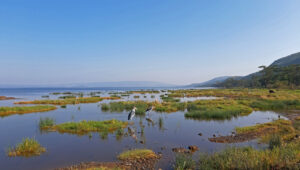

‘Lake Nakuru is one of our favourite national parks. Although it may be small, it is incredibly beautiful, particularly when seasonal flamingos feed on the lake’s surface. We recommend visiting the viewpoint to fully appreciate the park's beauty.’Anastasia | Kenya Travel Expert

Makalia Falls
You can get out of the car and enjoy the views of the picturesque waterfall Makalia Falls.

Baboon Cliff
From up here, you have a stunning view across Lake Nakuru National Park.

Birdwatching
Watch the pelican ballet as these impressive birds glide across the lake in formation.
Things to do
See some of the best animal and birdlife of the Great Rift Valley
Lake Nakuru National Park may be small, but it is home to a wide range of wildlife and some of the best birdwatching in East Africa.
Highlights of this beautiful park include:
- Visiting Makalia Falls
- Picnicking at Baboon Cliff viewpoint
- Enjoying superb birdwatching

Black & White Rhino
Lake Nakuru National Park is one of the best places to see rhinos in Kenya.

Lion
There is a sizeable number of lions in the park, some even climb on trees.

Buffalo
Watch this member of the Big Five lounging in the shallow waters and swamp areas of Lake Nakuru.

Waterbuck
These stunning antelopes enjoy the wooded areas of the national park.
WILDLIFE IN LAKE NAKURU NATIONAL PARK
A vital habitat for the conservation of endangered species
Lake Nakuru and the surrounding park are vital ecosystems with many habitats:
from wetlands to grasslands to dense forests home to a diverse range of bird and animal species.
Visitors can see:
- Black & White Rhino
- Flamingo
- Lions
- Hippos and buffalos
- Zebras and waterbucks
Where to stay in Lake Nakuru National Park


Location
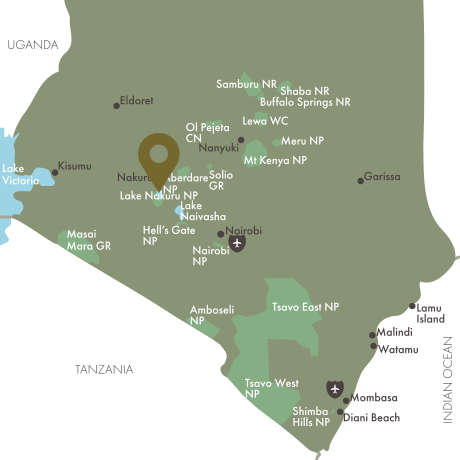
Lake Nakuru National Park is 150 to 160 km (100 miles) from Nairobi and can be accessed via the Nairobi-Nakuru Highway, with the Lanet Gate (Northeast) being the best entrance.
The Nderit Gate (Southeast) is suitable if arriving from the Masai Mara.
Baboon Cliff and Out of Africa viewpoints west of the lake are the best places to visit for excellent views. Travel to the south of the park to see Makalia Falls.
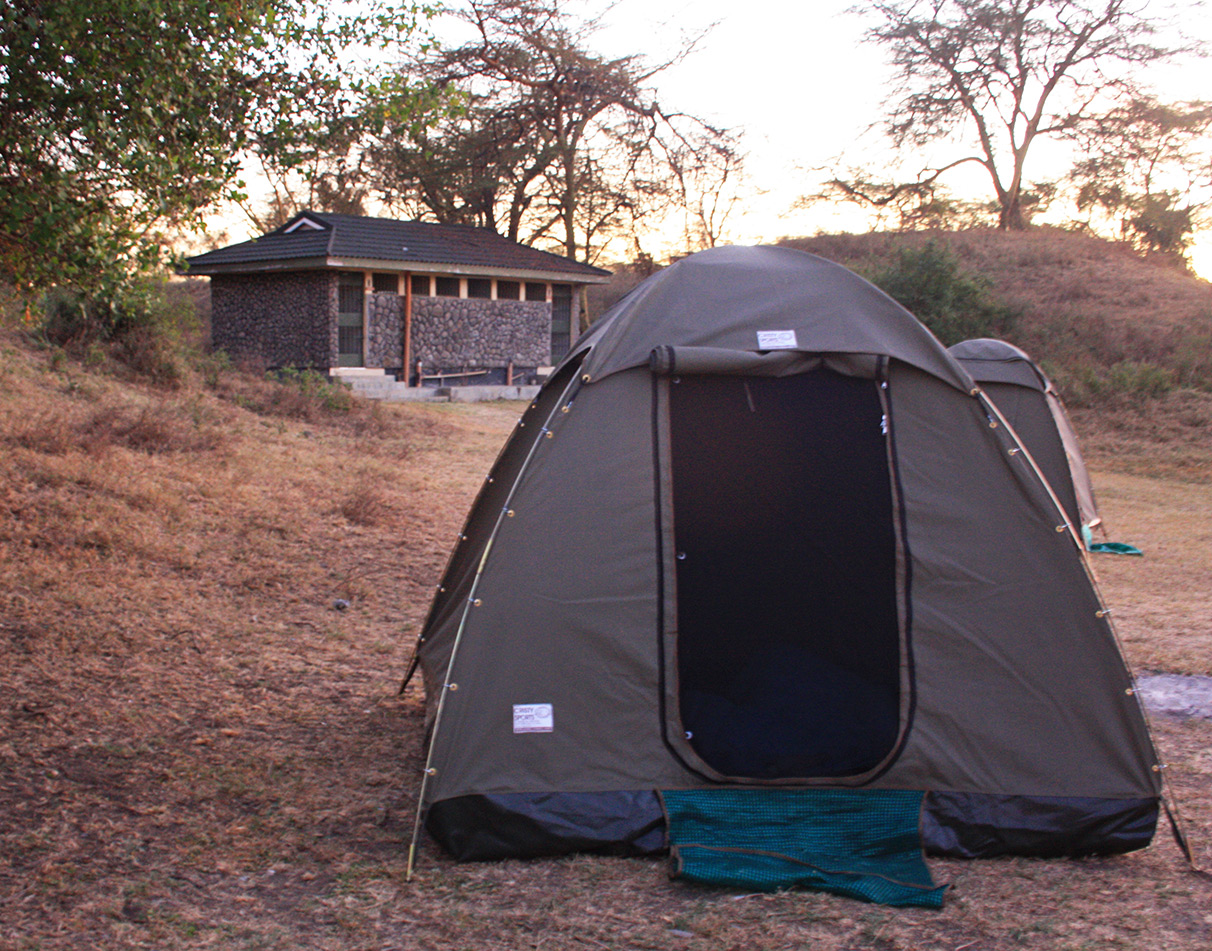
While a day trip is enough to explore most of the park, visitors who want to stay longer can opt for several lodges and campsites situated within the park.
- Lake Nakuru National Park
- Nairobi City 155 km | 3 to 4 hours by road
- Aberdare National Park 180 km | 3.5 to 4.5 hours by road
- Amboseli National Park 890 km | 8 to 9 hours by road
- Lake Naivasha 75 km | 2 hours by road
- Masai Mara Game Reserve 220 km | 5 to 6 hours by road
- Mount Kenya National Park (Chogoria Gate) 325 km | 8 to 9 hours by road


Experience Kenya with us
Speak to one of our local advisors
x
Let's start planning your trip!
We will get back to you within 2 working days.