on Google


Choosing between Mount Kenya and Mount Kilimanjaro can be a dilemma – both for hikers planning their first and for those planning their next African summit.
And it should hardly come as a surprise: Both mountains not only offer breathtaking scenery and an unforgettable trekking experience, but a true sense of achievement.
While Kilimanjaro holds the title as Africa’s highest peak, Mount Kenya is known for its quieter trails and rugged beauty. Regardless of whether you’re drawn to volcanic plateaus or glacier-capped peaks, you’ll find expert advice right here.
At Kenya Experience, we run Mount Kenya treks in partnership with our long-standing local experts. On the Tanzanian side of the border, our sister brand Tanzania Experience is your expert for climbs of Mount Kilimanjaro.
Location & Basic Mountain Facts – Mount Kenya vs Mount Kilimanjaro
| Mount Kenya | Mount Kilimanjaro | |
| Location | East Africa (Kenya) | East Africa (Tanzania) |
| Highest summit | Batian – 5,199 m/17,057 ft (technical climbing experience needed) Popular trekking summit: Point Lenana – 4,985 m/16,355 ft | Uhuru Peak – 5,895 m/19,341 ft |
| UNESCO status | Biosphere Reserve & World Heritage Site | World Heritage Site |
| Landscape zones | Montane forest → Afro-alpine moorland → Glaciers | Rainforest → Heath → Alpine desert → Arctic summit |
While both mountains are iconic peaks, they each offer distinct experiences.
Mount Kilimanjaro, located in northern Tanzania, is Africa’s tallest mountain and the world’s highest free-standing volcanic massif.
Despite its height, Kilimanjaro is considered a non-technical climb. It attracts over 35,000 climbers annually, most of whom aim to reach Uhuru Peak via one of several routes.
Mount Kenya, situated in central Kenya, is Africa’s second-highest mountain. While its true summit, Batian, requires serious mountaineering skills, Point Lenana is more easily accessible.
The mountain offers a more rugged and remote experience than Kilimanjaro, with dramatic ridges and fewer crowds. It attracts around 15,000 visitors per year.
Both mountains pass through dramatic vegetation zones, from lush forests to alpine terrain. This makes them biodiversity hotspots and rewarding destinations for adventurous travellers.

Mountain Facts: Scenery & Landscape Highlights
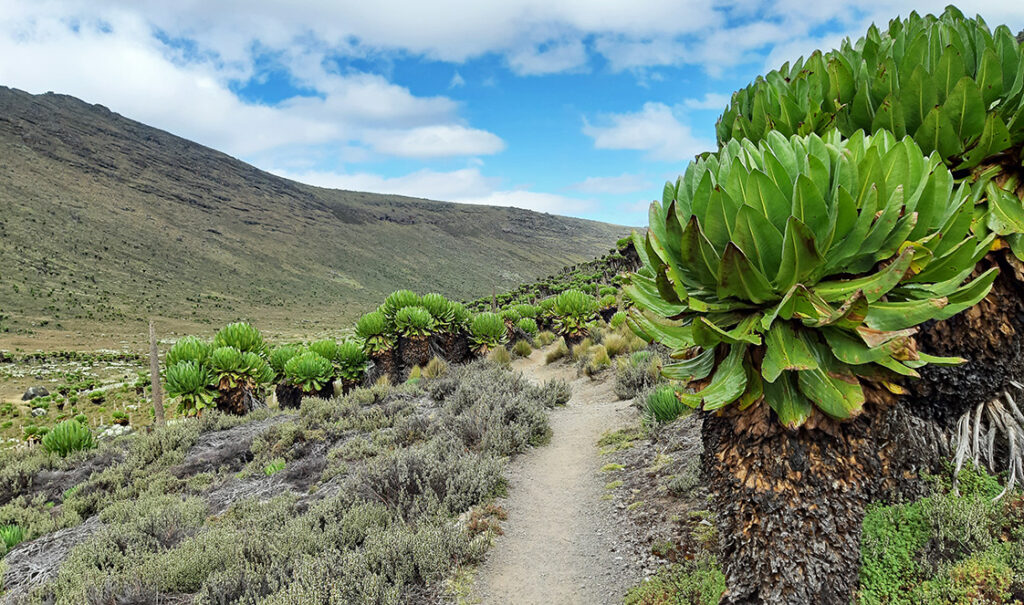
Often described as a fairy-tale mountain, Mount Kenya truly knows how to enchant hikers. The landscape ranges from lush forests to dramatic rock spires and quiet alpine valleys.
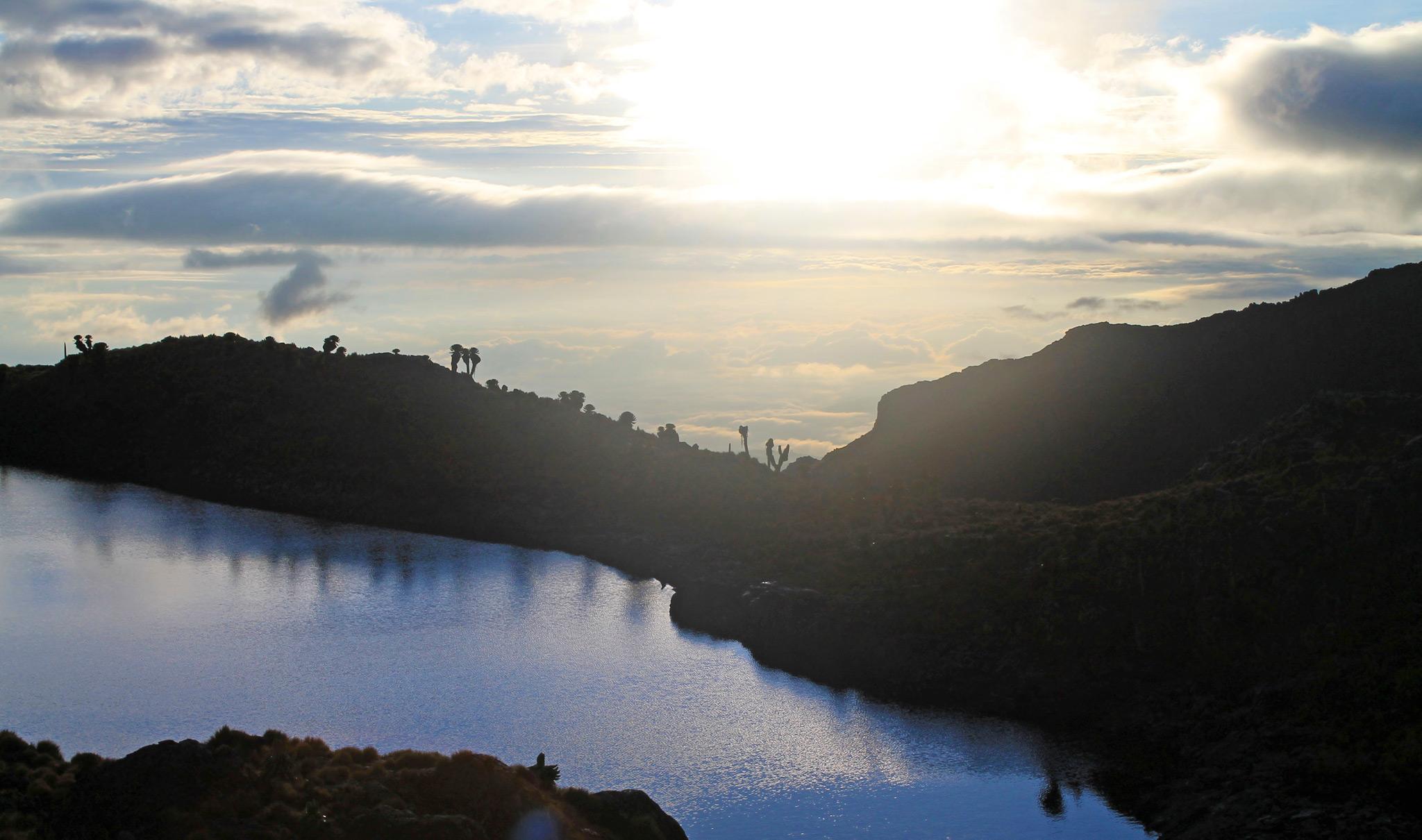
These are complemented by shimmering glacial lakes such as Lake Michaelson and Lake Ellis. The mountain feels untouched, wild, and wonderfully personal, making every step a discovery.
Unlike the more regulated routes on Kilimanjaro, trails on Mount Kenya offer a greater sense of freedom and solitude. Additionally, the mountain’s flexible trail system means treks can be tailored to fit your schedule and fitness level.
Rising dramatically from the plains of northern Tanzania, Mount Kilimanjaro, also known as “Roof of Africa”, is an iconic peak.
Hikers are taken on a journey through lush rainforest, moorland and surreal alpine desert before reaching its glacier-capped summit. Few places on earth offer such a shift in climate and ecology over just a few days on foot.
The mountain’s vast, open landscapes and striking silhouettes range from giant groundsels to ice fields. This makes for a dreamlike, almost lunar atmosphere that stays with trekkers long after the descent.
Views are particularly breathtaking during summit night. Watching the sun rise over Mount Meru and cast dramatic shadows across the plains below makes for an unforgettable sight.

Mt Kenya vs Mt Kilimanjaro: Trekking Experience & Difficulty
As Africa’s highest peak, Mount Kilimanjaro is a bucket-list adventure for many. It’s focused on the goal of reaching its highest point, Uhuru Peak, which stands at 5,895 m (17,057 ft).
Rather than extensive mountaineering experience the mountain “only” requires a certain level of fitness and determination. There are different routes with different levels of difficulty. However, regardless of their respective technical aspects, all routes are well-established and supported by experienced guides and porters.
Despite its popularity, summiting Kilimanjaro remains a deeply personal and emotional achievement. Regardless of the route you choose, the final push to Uhuru Peak will most likely be undertaken in the dark.
Arriving on the “Roof of Africa” just in time to witness the sunrise is an experience unlike any other.
In contrast, Mount Kenya is a favourite among experienced hikers and nature enthusiasts. The mountain’s lowest peak, Point Lenana, still stands at 4,985 m (6,355 ft) tall.
While it is a preferred choice in terms of accessibility, many trekkers don’t come here for record-breaking heights. They are drawn to the mountain’s scenic routes and glacial lakes without ever aiming for the top.
Mount Kenya is the ideal mountain for anyone unsure about coping with altitude. If you value peaceful trails, varied landscapes, and treks tailored to you over record-breaking heights, Mount Kenya is for you.
Popular Trekking Experiences:
Sirimon Route
Places Mount Kenya National Park
from 1,125 USD (based on >6 persons)

Chogoria Route
Places Mount Kenya National Park, Chogoria, Lake Ellis, Mintos Camp, Point Lenana, Shipton’s Camp, Mackiner’s Valley
from 1,350 USD (based on >6 persons)
Accommodation on the Mountain
Both mountains offer basic yet comfortable trekking accommodation, either in mountain huts or tents. Each of our Kilimanjaro and Mount Kenya experiences include a camp chef to prepare fresh meals daily throughout the climb.
Mt Kenya
Accommodation on Mount Kenya typically consists of a mix of mountain huts and tented camps, depending on your chosen route.
Popular trails such as Sirimon and Naro Moru offer a combination of both. However, on more remote routes like Chogoria, sites such as Mintos Camp are camping only.
Facilities are basic but scenic, and the relative quiet of the mountain makes for a peaceful night under the stars.
Mt Kilimanjaro
On Mount Kilimanjaro, camping is the norm across most routes – including Machame, Lemosho, and Rongai.
The Marangu Route is the only option with mountain huts rather than tents, offering dormitory-style shelter and shared facilities.
Regardless of the route, a mountain chef and team will accompany your trek, preparing hot meals daily and ensuring you stay fuelled and well looked after throughout your ascent.
Best Time to Climb – Mount Kenya vs Mount Kilimanjaro
On Mount Kenya, the north-facing slopes (particularly on the Sirimon and Chogoria routes) often experience short dry windows. This means that especially from December to March climbers are offered with excellent views of the glaciers and dramatic peaks.
While it is technically possible to trek during the wet seasons, the trails become muddy and visibility is reduced. Heavy rains can make conditions slippery, cold, and even dangerous, particularly in forested and alpine zones.
For the best overall experience, we strongly recommend climbing during one of the dry seasons. During those times, the trails are more pleasant and the mountain views are at their most spectacular.
Contact us in Kenya or get in touch with our team in Tanzania to find out more. Our experts are happy to plan your hike on either one of those iconic African peaks.

Add-On Activities
After your mountain adventure, why not extend your trip with a post-trek safari or a few days of relaxation on the coast?
Choose between safaris in Kenya and Tanzania, like the 4-day fly-in Magical Masai Mara or the 5-day Impressive Tanzania tour.
Both the Serengeti and Masai Mara offer unforgettable hot air balloon rides – another unique way to experience the sunrise.
If it’s beach time you’re after, unwind on Kenya’s Diani Beach or head to Zanzibar, Tanzania’s spice-scented island paradise.
Our Savannah and Sea allows you to combine a safari with a beach holiday. This will give you the best Kenya has to offer: high mountains, close-up wildlife encounters and the Indian Ocean lapping upon tropical beaches.
If you choose to climb Mount Kenya, you are close to the renowned Laikipia region. It is home to exclusive private conservancies such as Lewa, Solio, and Ol Pejeta – perfect for a northern Kenya safari.
Try Northern Kenya – Experience Remoteness for something truly off the beaten path.
Sample Tours & Choosing a Tour Operator
To make the most of your trek up either Mount Kenya or Kilimanjaro you should rely on an experienced operator. Below are a few sample tours to give you an idea of options and durations.
Mt Kenya Treks with Kenya Experience
Kenya Experience offers well-organised, fully guided private treks on Mount Kenya, with all logistics, meals, and park fees included. Our 5-day Chogoria Route is a scenic adventure taking you past alpine lakes and dramatic cliffs before summiting Point Lenana. Alternatively, the 4-day Sirimon Route is a shorter but equally rewarding trek, ideal if you have limited time.
Both options are private tours, guided by experienced local teams. They include overnight stays in mountain huts or tents, depending on preference. Whether you’re after remote wilderness or want to acclimatise before Kilimanjaro, these treks offer a memorable introduction to high-altitude hiking.

Mt Kilimanjaro Treks with Tanzania Experience
Tanzania Experience provides expertly guided Kilimanjaro climbs with full support teams and top-quality equipment.
Our 7-day Lemosho Route is a private climb designed for excellent acclimatisation, traversing different landscapes from rainforest to glacier. For a more sociable experience, the 6-day Machame Route group climb offers a challenging yet rewarding ascent.
Due to its steepness, it is often called the “Whiskey Route”. All climbs are led by certified guides, with a focus on safety, success rates, and ethical porter treatment.
They offer a reliable way to reach Africa’s highest point for seasoned adventurers and first-time trekkers alike.
Quick Reference Table – Mount Kenya vs Mount Kilimanjaro
| Factor | Mt Kenya | Mt Kilimanjaro |
| Max altitude | 5,199 m / 17,057 ft (Batian) | 5,895 m / 19,341 ft |
| Typical trek days with our Experiences | 4 – 5 | 6 – 7 |
| Technical climbing? | Only for Batian/Nelion | No |
| Average cost (USD) | $ 1,000 – 2,000 | $ 2,100 – 2,900 |
| Crowd level | Low–moderate | High (peak months) |
| Success rate | 95 % (Lenana) | 65 – 70 % |
| Add-on safaris | Samburu, Mara | Serengeti, Ngorongoro |
Final thoughts – Mount Kenya vs Mount Kilimanjaro
Both Mount Kenya and Kilimanjaro boast dramatic changes in landscape and vegetation, from forest to alpine terrain. Choosing between the two ultimately comes down to your personal trekking goals and preferences.
If you’re drawn to the challenge of reaching Africa’s highest point, Mount Kilimanjaro offers an unrivalled sense of achievement. Its popularity may mean larger crowds and generally higher costs.
However, a strong support infrastructure combined with an iconic summit and spectacular glacier views are hard to beat.
In contrast, Mount Kenya offers a more off-the-beaten-path experience. Its trails are quieter, the scenery more rugged and varied, and it comes out favourable in terms of cost comparison.
While only experienced climbers can reach its true summit (Batian), the peak of Point Lenana still provides a rewarding adventure.
Still not sure which mountain is right for you? Mount Kenya vs Mount Kilimanjaro is a tough choice, we know. Speak to our experienced trekking teams at Kenya Experience or Tanzania Experience.
They’ll help tailor the perfect itinerary based on your fitness level, schedule, and ambitions. Turn your East African trekking dream into reality – with professional help from our local experts.
Author: Christina Leitner